
Craft Library
The Craft Library
The heritage South Asian embroidery and techniques behind Karigur bridal, zardozi, dabka, resham, kamdani, and more.
The Craft Library
A vocabulary of handwork
Every Karigur bridal is built from these heritage techniques. Explore each one.
Metal-thread work
Mughal courts · gold-work
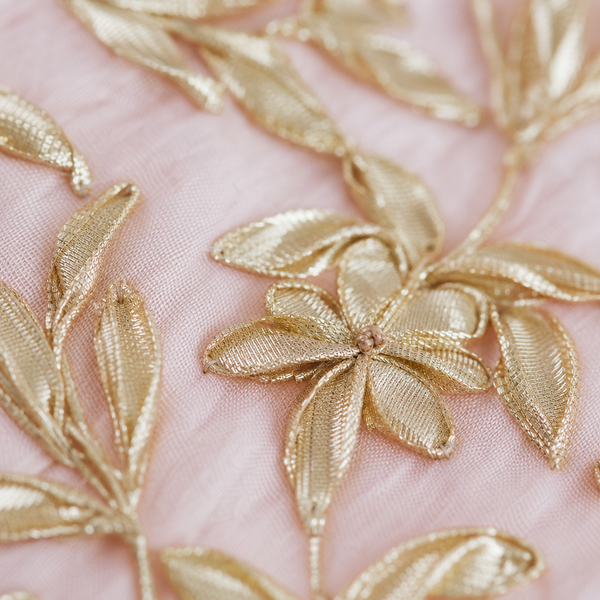
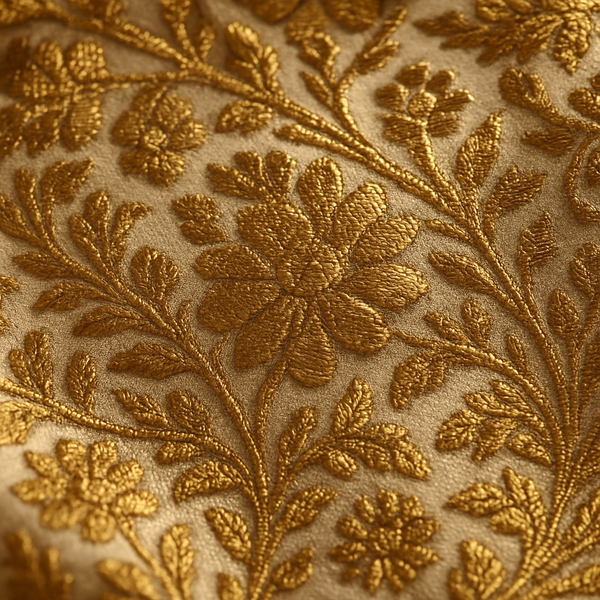
Zardozi
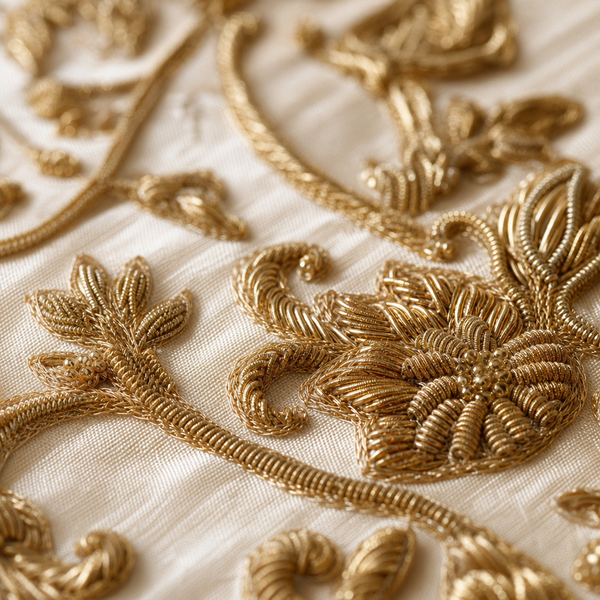
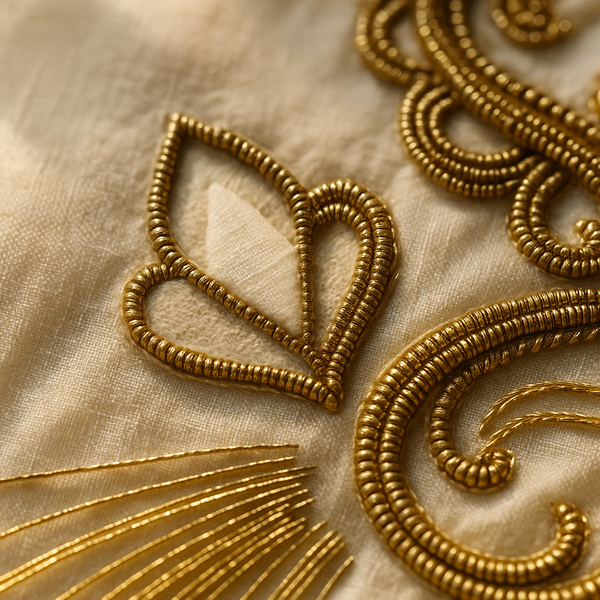
Zardozi is a centuries-old metallic hand-embroidery in which gold- and silver-toned threads are couched onto fabric to create raised, dimensional motifs.
Reading handwork · comparison
Kora vs Dabka vs Zardozi
How to tell the three metal-thread techniques apart by eye, by touch, and by the back of the fabric.
Lucknow · metal-dot work
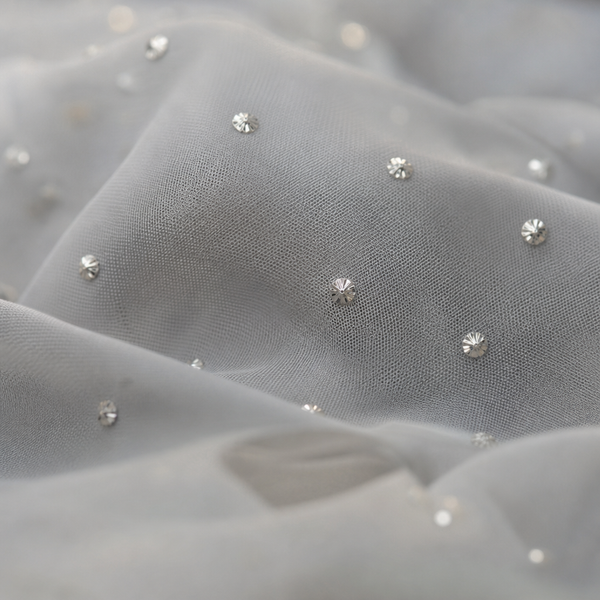
Mukaish
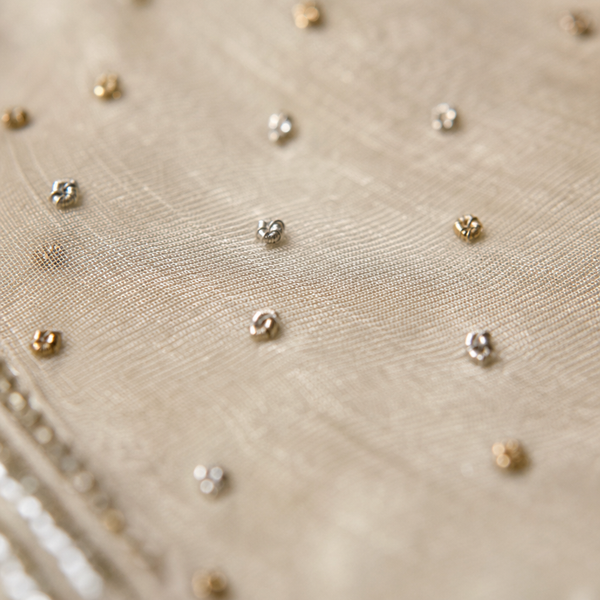
Mukaish is a delicate metal-thread technique in which tiny metallic dots or strips are twisted into fabric by hand.
Punjab and Kashmir, for generations
Tilla
Flattened gold or silver metallic thread couched over silk, the Punjab and Kashmir tradition of metal embroidery.
The zardozi workrooms of the subcontinent
Kora
Matte, unpolished bullion wire. Where dabka shines, kora glows quietly.
Mughal-era ateliers onward
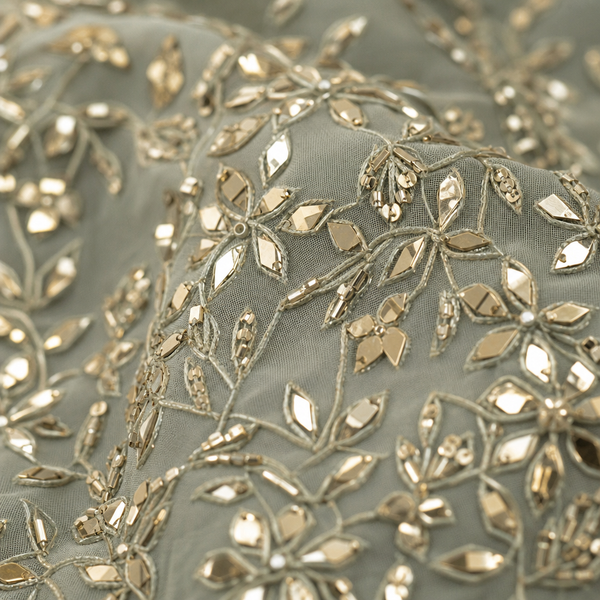
Sitara
Tiny metal stars and sequins stitched singly so the surface glints as the bride moves.

Bead, wire & mirror
Coiled-wire work
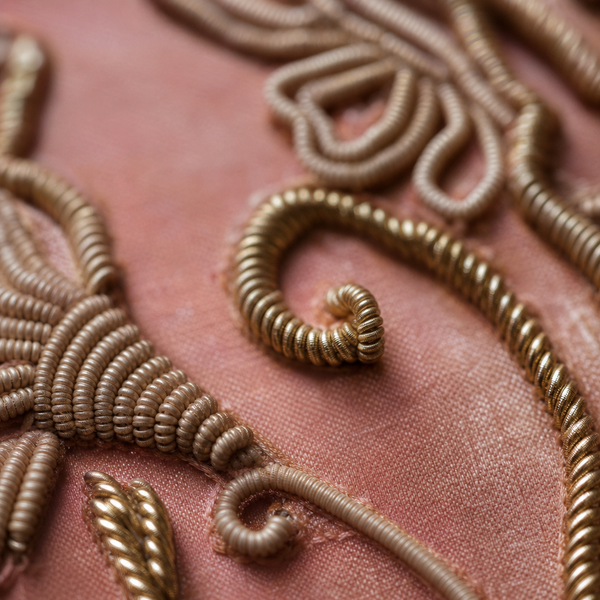
Dabka
Dabka is a coiled metallic-wire hand-embroidery that adds fine, light-catching texture to South Asian bridal couture.
Outline & fill work
Naqshi
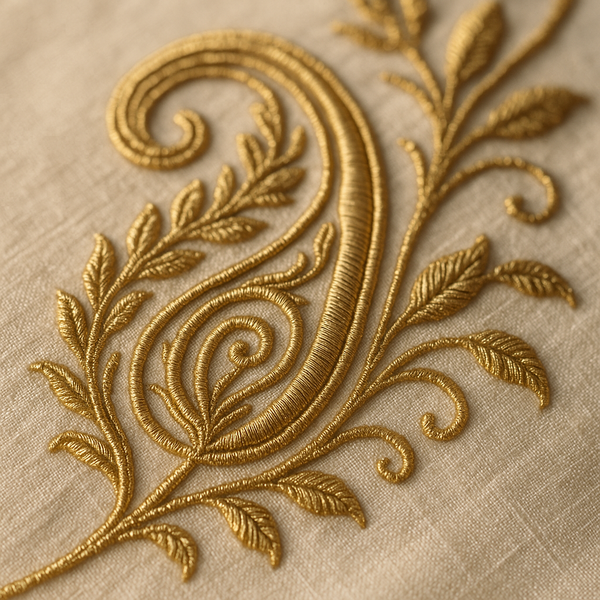
Naqshi is a flat, patterned metallic embroidery used to outline and fill bridal motifs.
Rajasthan · ribbon appliqué
Gota
Gota is an appliqué of woven metallic ribbon, cut and stitched into floral and geometric forms.
The beadwork benches of Karachi and beyond
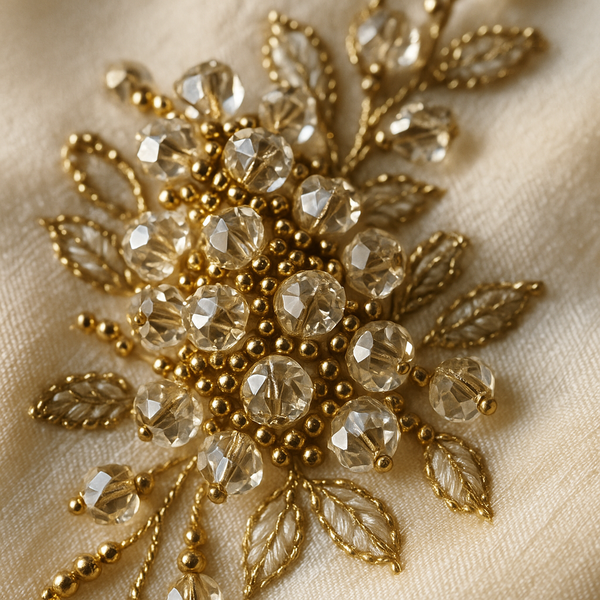
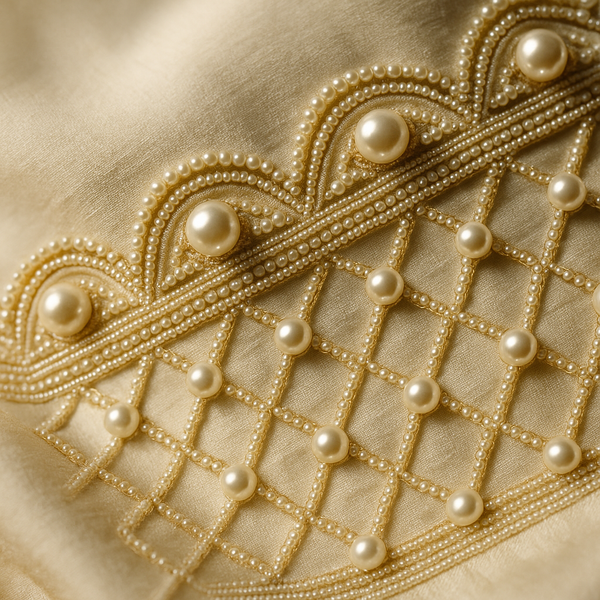
Cutdana
Faceted cut-glass beads sewn into the kaam, sharper light than a pearl, softer than a stone.
Sindh, Gujarat and Rajasthan, traditionally
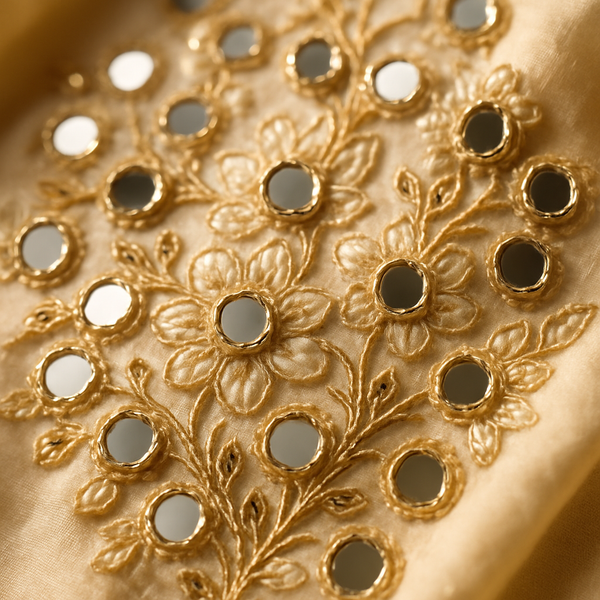
Sheesha
Mirror work: small glass discs held in webs of thread.
Thread & foundation
Silk-thread work
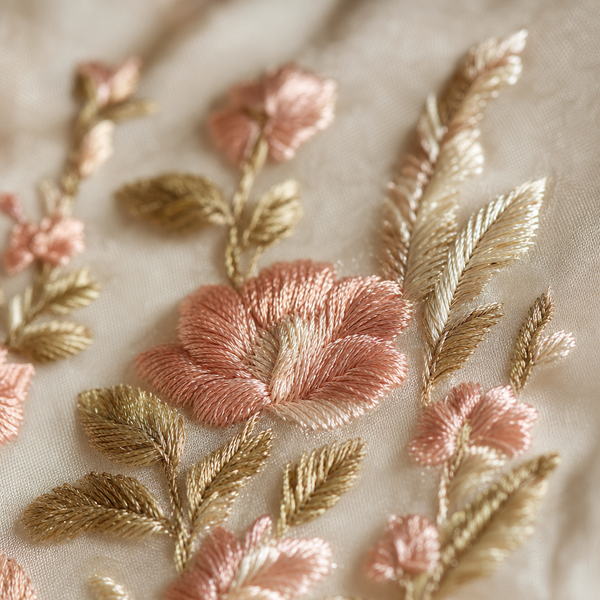
Resham
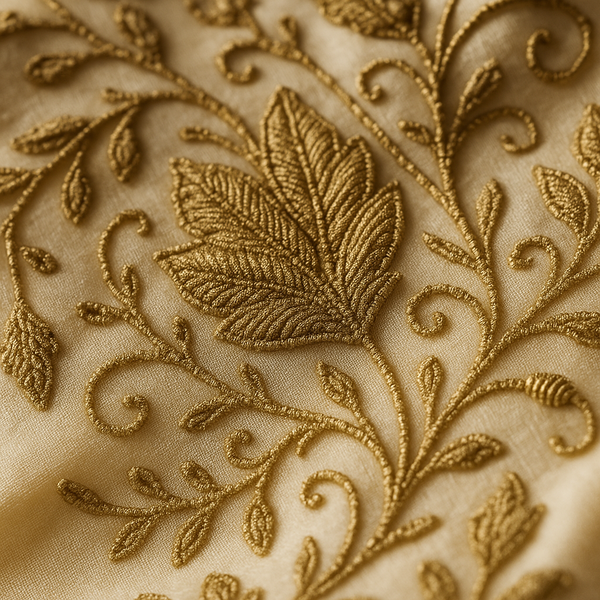
Resham is fine silk-thread embroidery that adds colour and softness alongside metallic work.
Fine all-over work
Kamdani
Kamdani is a light, all-over metallic dot embroidery historically worn on fine bridal fabrics.
Kashmir and the Mughal workshops, traditionally
Aari
Hook-needle chain stitch worked fast and fine from above the frame.
The zardozi process itself
Vasli
The stiffened foundation under raised metal embroidery, the reason zardozi holds its shape.
Workrooms across South Asia
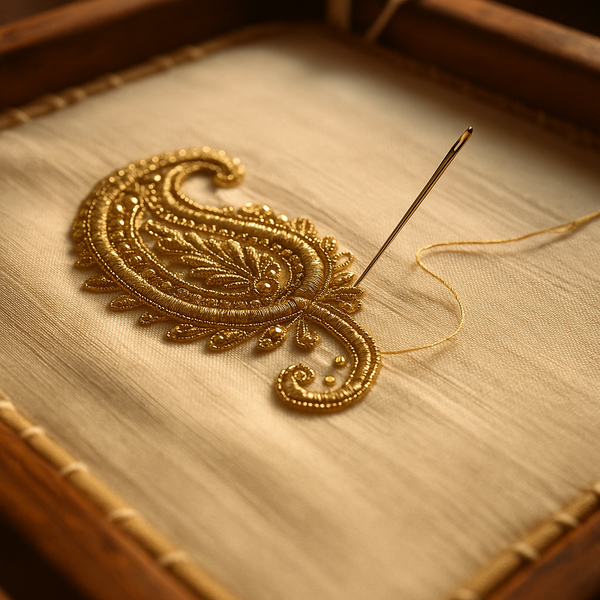
Adda
The wooden frame the fabric is stretched on, and the sitting-together way the karigars work it.
The first step of every commission
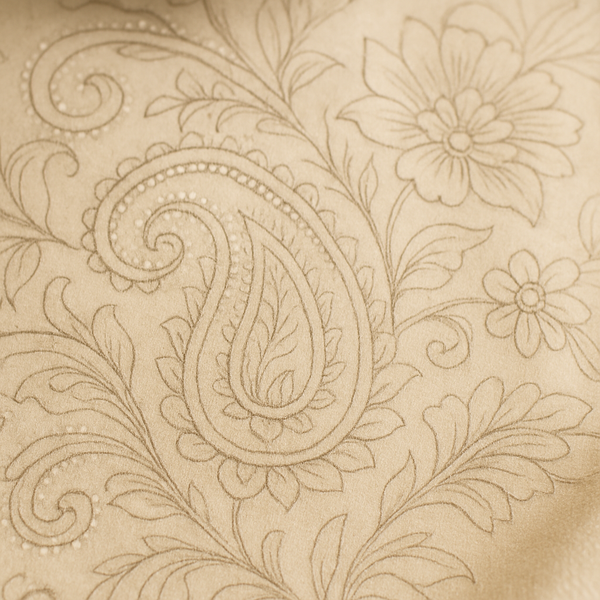
Khaka
The hand-drawn map of the embroidery, pounced onto cloth before a single stitch.
Silhouette & cloth
Silhouette · main-day
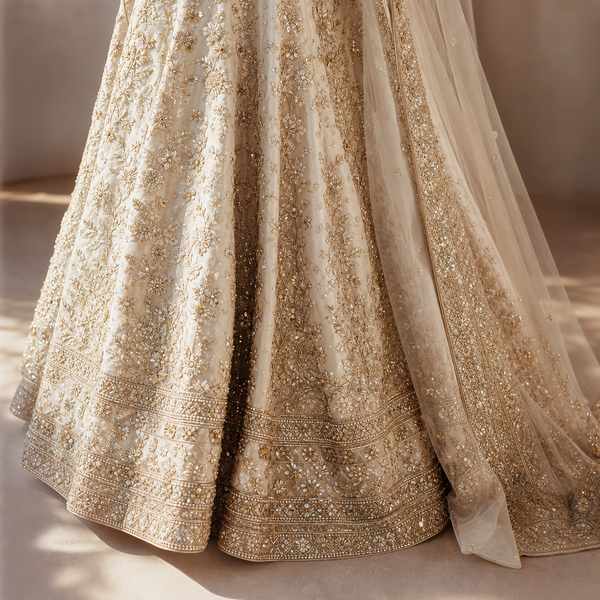
Lehenga
A lehenga is a flared bridal skirt worn with a fitted choli and dupatta, the most-chosen silhouette for the main day.
Silhouette · heritage
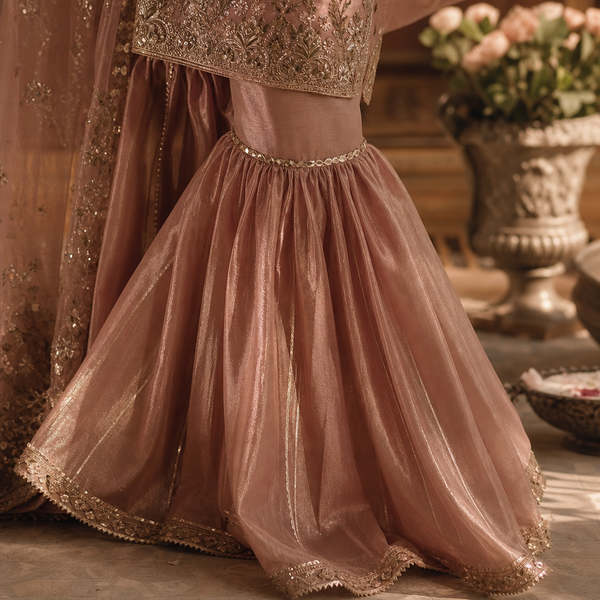
Gharara
A gharara is a regal silhouette of wide, flared trousers gathered at the knee, worn with a short kurti and dupatta.
Kashmir weaving tradition
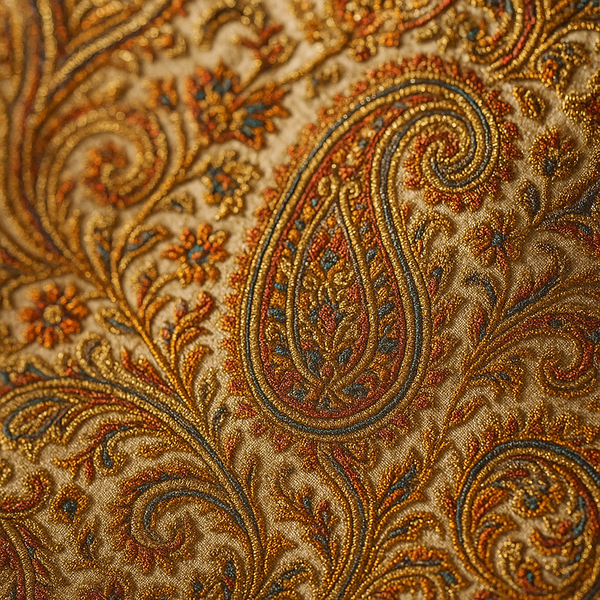
Jamawar
A woven brocade whose pattern is in the cloth itself, not printed on it.
The old weaving houses of Banaras
Banarsi
The Banaras-tradition silk brocade woven with metallic zari.
In Short
What is South Asian bridal embroidery, and why does it matter?
South Asian bridal embroidery is a family of heritage hand-techniques, zardozi, dabka, resham, kamdani, gota, and more, worked thread by thread onto fabric to build the dimension, weight, and light of a bridal. At Karigur Bridal, our karigars layer these by hand at the Noori House Atelier, which is why a serious bridal looks and moves the way it does.
How to Read the Handwork on a Bridal
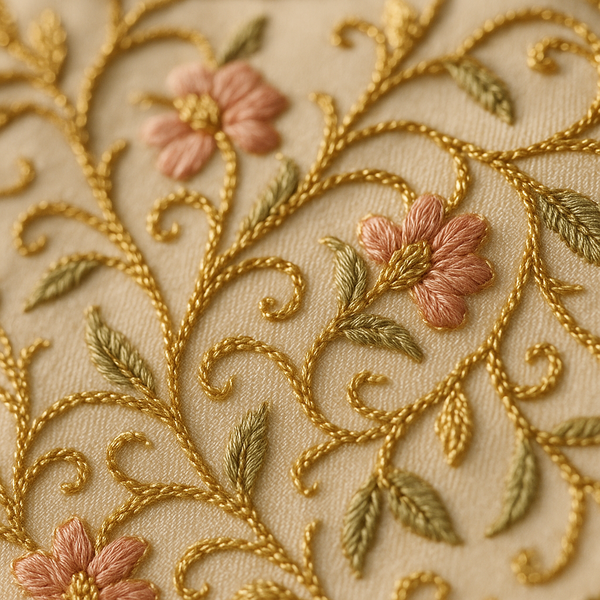
Every Karigur bridal is built from a small vocabulary of techniques, layered by hand. Learning to name them changes how you choose a gown: you stop seeing "a lot of work" and start seeing zardozi catching the light, dabka outlining a motif, resham warming the gold with colour. This library explains each technique, where it comes from, how it is worked, and what it does for a finished piece, so you can recognise real craftsmanship and choose with confidence.
What is the difference between zardozi and dabka?
Zardozi is raised metallic hand-embroidery that carries the heaviest, most dimensional motifs, the work a baraat gown is built around. Dabka is a finer coiled-wire technique that gives borders and outlines a soft, matte shimmer and defines the edges of a motif before they are filled. On most bridals you will see both: dabka draws the lines, zardozi fills them with weight and light.
How do I know if bridal embroidery is genuinely hand-done?
Hand-embroidery has small, living variations, slightly raised surfaces, motifs that catch light from different angles, and density that follows the design rather than a machine grid. Techniques like mukaish and kamdani, where tiny metal dots are twisted into the cloth by hand, are very hard to fake. The guides below show what each technique looks like up close, so you can tell hand-laid kaam from a printed or machine-stitched imitation.
See the Craft in Person
Book a consultation to see Karigur handwork up close at our Toronto flagship.